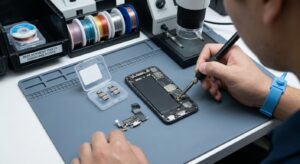
Professional Software and Component Repair in Jerrabomberra, Queanbeyan & Canberra

Software and Component Repair featured image for repair service

Why Choose Phone Link for Software and Component Repair?

Is your phone boot-looping, freezing, or showing an “Operating System Not Found” error? Perhaps it powers on, but specific internal parts like the cameras, sensors, or charging systems are unresponsive. These issues require specialized diagnostics that bridge the gap between abstract code and physical hardware. At Phone Link Repair, we don’t just swap parts; we understand how the software ecosystem and the physical micro-components interact, restoring complete system integrity.

We diagnose and resolve software corruption, firmware failures, and component-level faults for both Android and iOS devices, ensuring seamless communication between the operating system and the hardware it controls.


The Invisible Link: Where Software Meets Firmware

A smartphone is only as functional as its lowest-level code. Software repair involves much more than simply “resetting” the device; it requires navigating the different layers of programming that define how the hardware is initialized and controlled.

Understanding the Code Layers

When Phone Link Repair performs software recovery, we are often working within these essential layers:

  • 1. The User Data/Application Layer: The outermost layer containing your photos, apps, and settings. A corrupted OS update can trap this data.
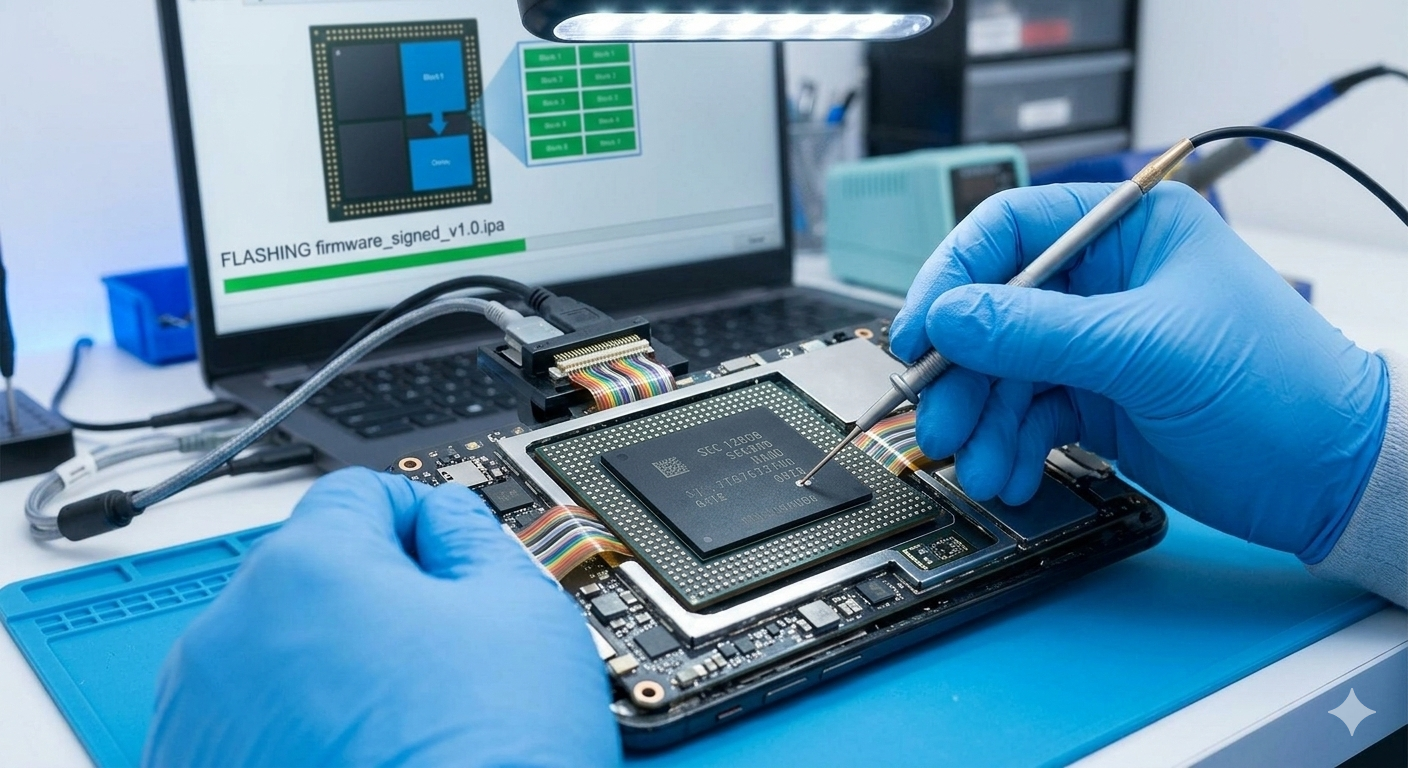
  • 2. The Operating System (Android/iOS): The main management system. We use advanced, manufacturer-approved tools to flash clean, signed firmware (IPS/OTA packages) without erasing your personal data, provided the physical NAND storage chip is healthy.
  • 3. Baseband Firmware (The Modem): A highly specialized, isolated OS that manages the cellular, Wi-Fi, and Bluetooth radios. A corruption here (often following a failed update) can cause your phone to “boot-loop” indefinitely or completely lose all connectivity, requiring professional reprogramming of the Baseband IC (Integrated Circuit).
  • 4. The Kernel and Drivers: This code allows the main OS to speak with the hardware (e.g., the camera, display, and battery). A driver failure often mirrors a hardware failure; our software diagnostics can confirm whether a component is physically broken or just programmatically unresponsive.

Advanced Micro-Soldering and Component-Level Repair

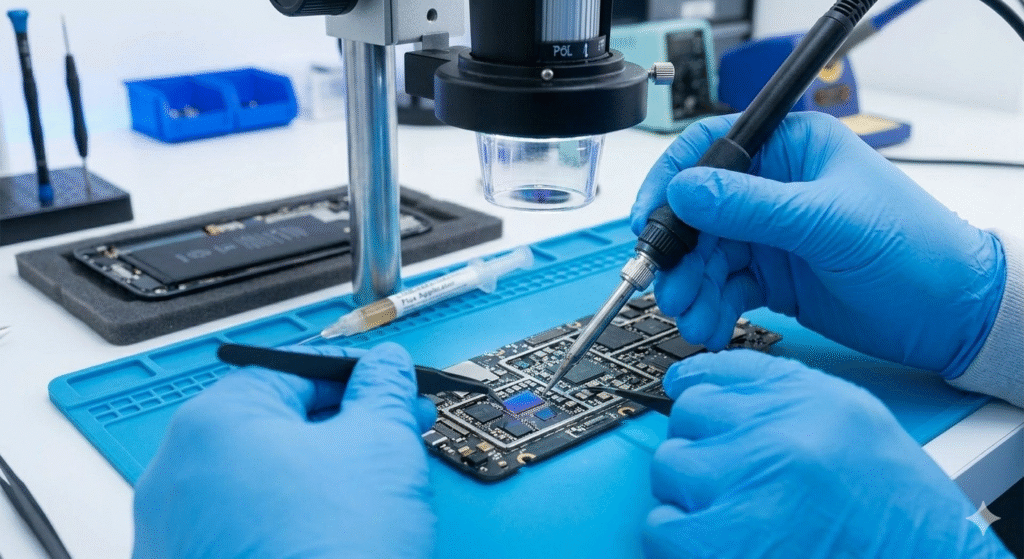
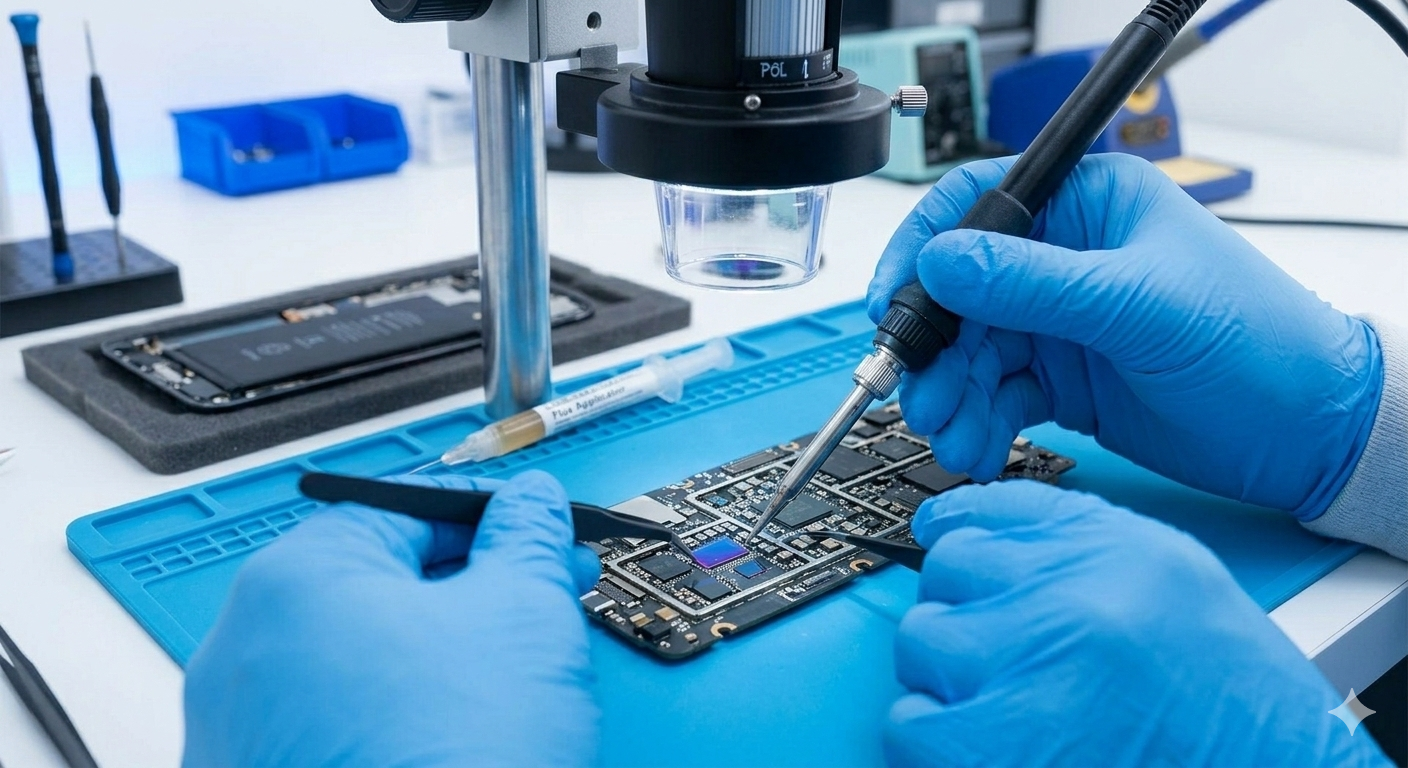
Modern electronics manufacturing uses Surface-Mount Technology (SMT), where components, often microscopic, are soldered directly onto the logic board surface. This is where physical component repair happens.

Micro-Engineering: Why It Matters

Phone Link Repair utilizes specialized microscopy to diagnose and repair the multi-layer, integrated circuitry found in all modern logic boards.

  1. SMT/SMD Components: The individual resistor, capacitor, or diode that regulates power or filters signals.
  2. Integrated Circuits (ICs) / ‘Chips’: The main logic board shown in our other repair visualizations (such as image_2.png) is densely packed with specialized ICs. When a power surge occurs, the “brain” chip doesn’t die; typically, one small Power Management IC (PMIC) nearby fails. Replacing this microscopic chip, rather than the whole board, saves you time and data.
  3. Flexible Ribbon Cables (Flex Cables): The delicate data superhighways that connect components (like the screen or camera) to the logic board. These are incredibly thin and susceptible to tearing. Our technicians can perform intricate micro-jumper work to restore broken traces within a flex cable, saving an original component.
  4. Trace Repair and Pads: Sometimes, the electrical pathways (traces) within the logic board are damaged by corrosion or physical stress. We employ precision trace mapping and jumper wire techniques, utilizing invisible-to-the-naked-eye wires to bridge broken connections and restore function.